Historic Preservation Security Cameras: FAQ
By Aoife O'Connell • 28th Apr
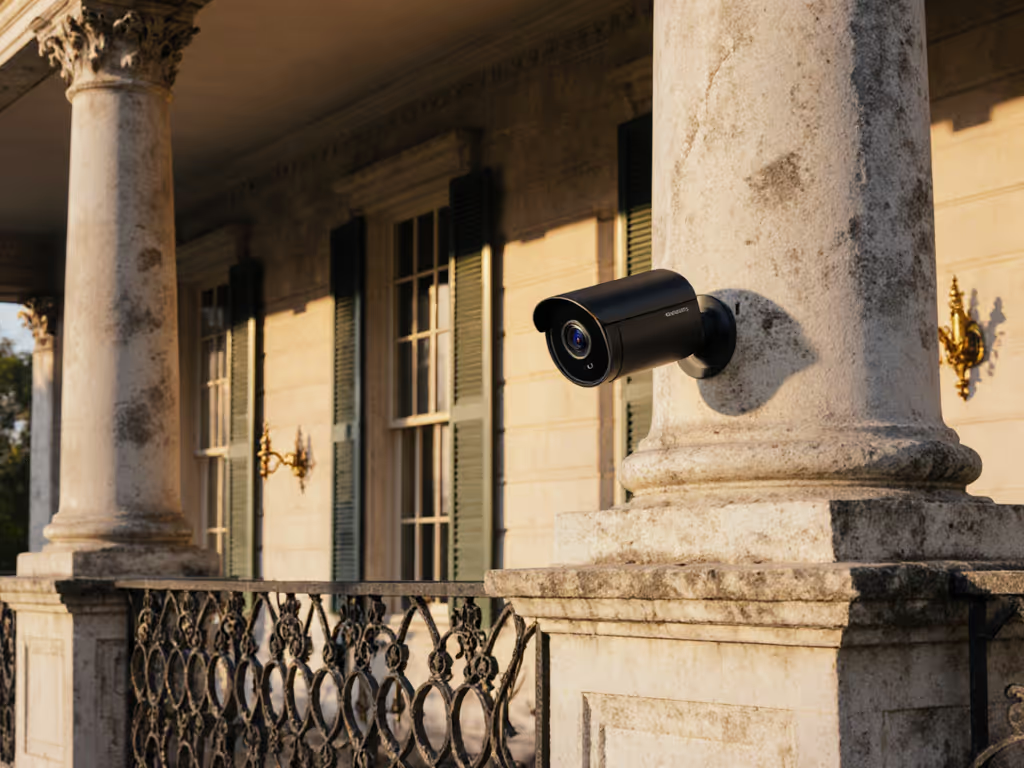
Historical preservation security cameras and non-invasive security installation are no longer opposing forces. Modern systems can protect treasured properties without drilling holes or damaging irreplaceable finishes. This FAQ walks through the real questions homeowners, curators, and property managers ask when balancing security needs with preservation compliance.
Why Does Placement Matter More Than Fancy Specs?
Here's the truth nobody advertises: a $200 camera in the wrong spot, mounted wrong, or powered wrong will leak more false alerts than a premium system that sits in glare or relies on flaky Wi-Fi. Solid mounts and clean power beat fancy features. For step-by-step placement strategies, see our camera placement guide. I once worked with a family whose driveway camera "missed everything" (their mount wobbled in the wind, the Wi-Fi dropped during peak theft hours, and the infrared bounced off a white wall like a disco ball). We rewired it to PoE, added a wedge mount, and aimed past the glare. Suddenly the false alerts stopped, plates popped clearly at night, and the house went quiet until it actually mattered.
For historic buildings, placement discipline is even more critical. Your options are constrained by preservation guidelines, so every angle has to work harder. A camera mounted discreetly in a corner may capture less area but can still monitor effectively if positioned at the right height and angle. The key is understanding your failure modes: backlighting from sunset, IR reflection off painted surfaces, or Wi-Fi dead zones before you install anything.
What Mounting Methods Won't Trigger Preservation Board Pushback?
Preservation boards aren't anti-security (they're pro-integrity). The rules exist to protect plaster, mortar, historic hardware, and architectural character. For a deeper walkthrough of preservation-friendly installs, read our non-invasive historic home security guide.
- Wireless and battery-powered sensors bypass drilling entirely. No holes, no anchors, no damage. They're temporary in the best sense: add protection without permanent alteration.
- Adhesive mounting and temporary systems let you test placement before committing to hardware changes. This "try before you commit" approach catches mistakes early (like discovering that a corner camera actually has line-of-sight to the adjacent building's light).
- Recessed burglary sensors installed indoors keep the intrusion detection hidden from view, maintaining the room's period aesthetic.
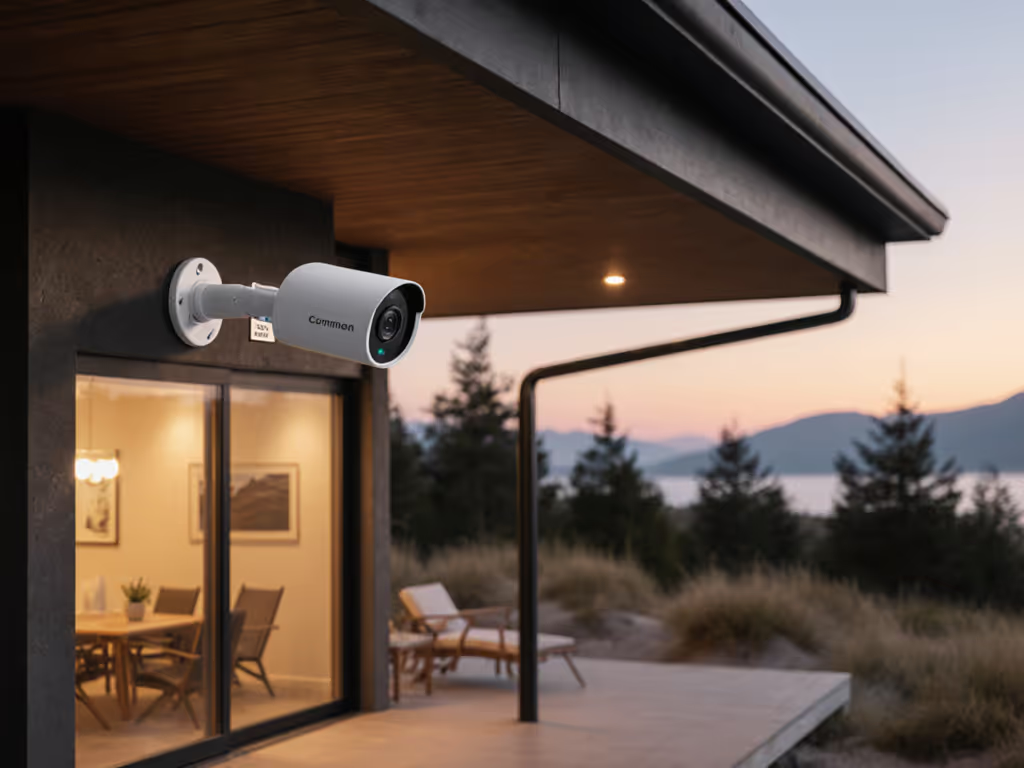
- Strategic camera placement in less conspicuous areas (corners, alcoves, or upper wall-mounted positions) preserves sightlines while keeping the system discreet. A ceiling-mounted camera in a corner goes largely unnoticed by visitors, yet covers large areas effectively.
- Concealing wiring in baseboards, behind moldings, or cavity spaces avoids visible disruption. If drilling is absolutely necessary, work within existing service runs (electrical conduit, old phone lines) rather than creating new paths.
- Hardware that blends with period aesthetics (bronze finishes, slim profiles, period-appropriate junction boxes) makes the gear feel like it belongs.
How Do You Handle Compliance Before Installation?
Skip this step and you'll waste time, money, and trust. Here's the checklist:
- Research local regulations and preservation guidelines. Contact your city's historic district commission, HOA, or preservation society. Get the rules in writing.
- Consult with preservation experts and architects who specialize in historic properties. They know which modifications are non-starters and which ones have precedent.
- Document the existing conditions. Photos, measurements, and material samples (paint, plaster, wood) help experts advise on safe mounting and wiring routes.
- Propose the installation in writing, including camera placement diagrams, wiring routes, and a materials list. Specificity builds confidence (vague plans trigger delays).
- Request written approval before breaking ground. Email confirmation saves arguments later.
The timeline varies: some boards respond in weeks, others take months. Wire it once, keep it quiet (which includes getting the paperwork right the first time).
What About Fire Safety and Environmental Monitoring?
Modern security systems for historic buildings now integrate life-safety measures without compromising aesthetics. Fire alarm systems, smoke detectors, and automatic suppression systems can coexist with surveillance and access control. Environmental sensors (humidity, temperature, water detection) protect artifacts while the building also benefits from intrusion detection and surveillance.
This integrated approach satisfies both preservation and safety codes. Emergency lighting and exit signage can be updated to meet modern safety standards while maintaining traditional aesthetics.
Can You Use Wireless or Cloud-Based Systems in Historic Buildings?
Yes, with caveats. Many modern systems are wireless or use minimal cabling, which aligns well with preservation goals. Cloud-based security systems offer encrypted, up-to-date protection and can integrate with mobile apps for real-time alerts. To choose storage that survives outages without breaking privacy budgets, see our cloud vs local storage comparison.
However, wireless systems depend on stable Wi-Fi. In older buildings with thick plaster walls, lath-and-plaster construction, or metal flashing, signal strength can be unpredictable. Before you commit to wireless, do a site survey: walk the perimeter with your phone and test signal strength in the intended camera zones. Dead zones reveal where Wi-Fi backhaul won't reach.
For permanent, mission-critical coverage, wired solutions (PoE where feasible, or low-voltage cable runs) are more reliable. They also eliminate battery-management headaches and don't compete with Wi-Fi bandwidth.
How Do You Balance Access Control, Surveillance, and Accessibility?
Smart access control systems allow you to restrict entry to sensitive areas while keeping public zones open. Key cards, biometric scanners, or modern smart locks provide enhanced security without replacing original doors or hardware.
But security can't strangle function. Historic buildings often host visitors, researchers, or community events. The system should enforce who enters secure archives or storage while remaining transparent to legitimate foot traffic. Motion detection in restricted zones, combined with discreet surveillance cameras, provides auditable logs without creating an oppressive surveillance presence.
What's the First Step if Your Historic Property Isn't Yet Secured?
Start with a preservation-compliant risk assessment before you buy a single camera. Walk the building with a preservation expert and a security professional who specialize in historic properties. Identify:
- Which areas are highest-risk (entry points, artifact storage, visitor access).
- Which mounting methods the preservation board will allow.
- Where Wi-Fi coverage is strong and where it's weak.
- Existing wiring runs you can reuse.
- Power sources (outlets, circuit capacity) for any hardwired systems.
- Sightlines and angles that let a single camera cover large areas.
Then prioritize: start with one or two strategically placed cameras that solve your biggest blind spots. To make those few cameras cover more area without distortion, use our field of view guide. Test the placement, the power delivery, and the alert tuning for 30 days. Make adjustments. Only then add a second phase.
This deliberate, measured approach prevents costly mistakes (like discovering mid-install that a camera is illegal under your preservation agreement, or that it creates intolerable false alerts because it faces a light-colored wall).
Your Next Move
If your historic property (whether a home, small museum, or heritage business) needs security without sacrificing character, schedule a consultation with both a preservation specialist and a security installer who has completed at least three projects in your building's era and locale. Come with your preservation guidelines in hand and a clear list of your highest-risk areas. Ask them to propose a phased approach, starting with one camera and expanding only after you've proven the placement, power, and alert tuning work. That's how solid systems get built: one reliable install at a time, compliance locked in, false alerts minimized, and your building's integrity preserved for the next hundred years.
Related Articles