Autonomous Surveillance: Off-Grid Security Cameras That Just Work
By Aoife O'Connell • 23rd Nov
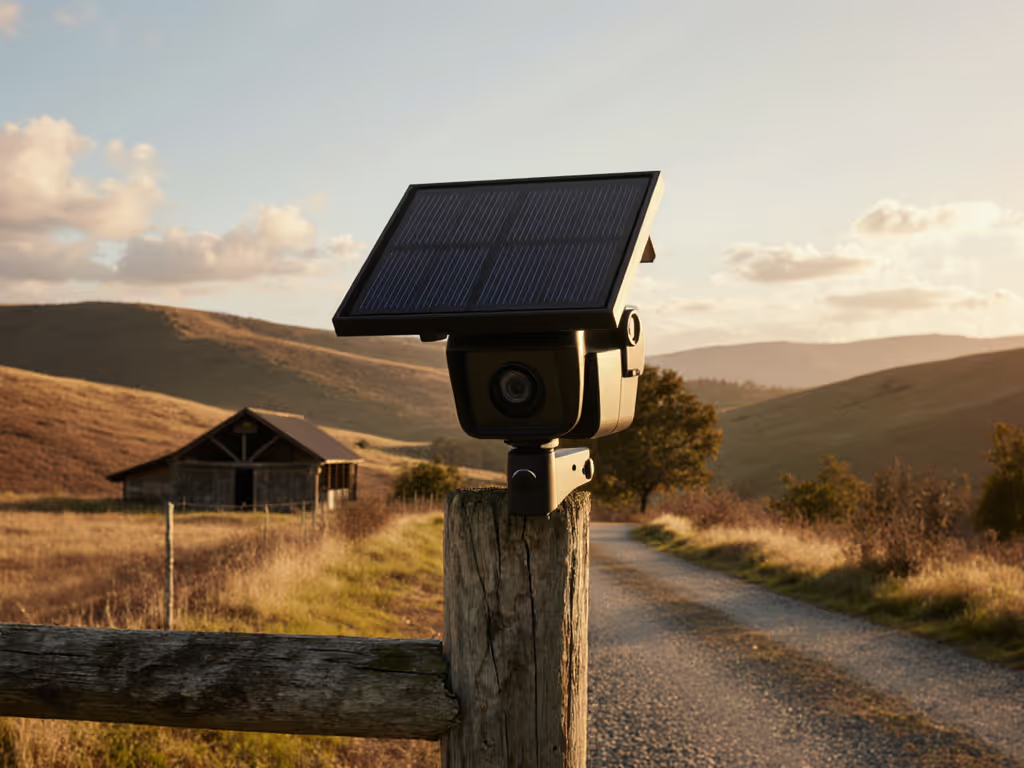
When you deploy off-grid security cameras for remote property surveillance, you're not just chasing convenience, you're solving real gaps where Wi-Fi drops, power flickers, and false alerts drown out critical threats. I've seen too many systems fail because homeowners prioritized flashy features over foundational reliability. The truth? Solid mounts and clean power beat fancy features every time. Let's build a system that surveils autonomously, silent when quiet, crystal clear when it counts.
Why Off-Grid Systems Fail (And How to Fix It)
Most "wireless" cameras fail off-grid because they're designed for suburban porches, not remote cabins. They assume stable Wi-Fi, consistent power, and minimal environmental interference. But rural crime costs UK farms £43.3 million annually (NFU Mutual, 2021), and 72% of break-ins drop when properly installed cameras guard remote properties (Aberdeen trials). Your system must overcome three core challenges:
- Power instability: Batteries drain in cold weather; solar panels sit in shade
- Network blackouts: Wi-Fi vanishes beyond 100 feet; cellular signals fade
- Environmental noise: Wind, insects, and glare trigger false alerts
Here's how to engineer reliability into every layer, using failure mode thinking from day one. For optimal coverage from day one, see our security camera placement guide.
Step 1: Scout Locations Like a Tracker (Placement First)
Before you buy a single component, walk your property with these questions:
- Where does the threat enter? (Driveways, gates, rooflines (not centered on lawns))
- Where's stable sunlight? (South-facing for solar panels; avoid tree cover)
- What surfaces vibrate? (Avoid fence posts; use brick/concrete mounts)
I once found a family's driveway camera "missing everything" because it wobbled on a flimsy gatepost. Tree branches triggered 200+ daily false alerts while thieves walked unseen. We remounted it to a concrete pillar with a wedge, immediately cutting noise and capturing license plates at night. Your camera's angle is its first filter. Prioritize these:
- Height: 8-10 feet (too low = glare; too high = distorted faces)
- Backlight avoidance: Never point toward sunrise/sunset paths
- Stable anchor points: Masonry > metal posts > wooden fences
Step 2: Power It Right (No More Dead Batteries)
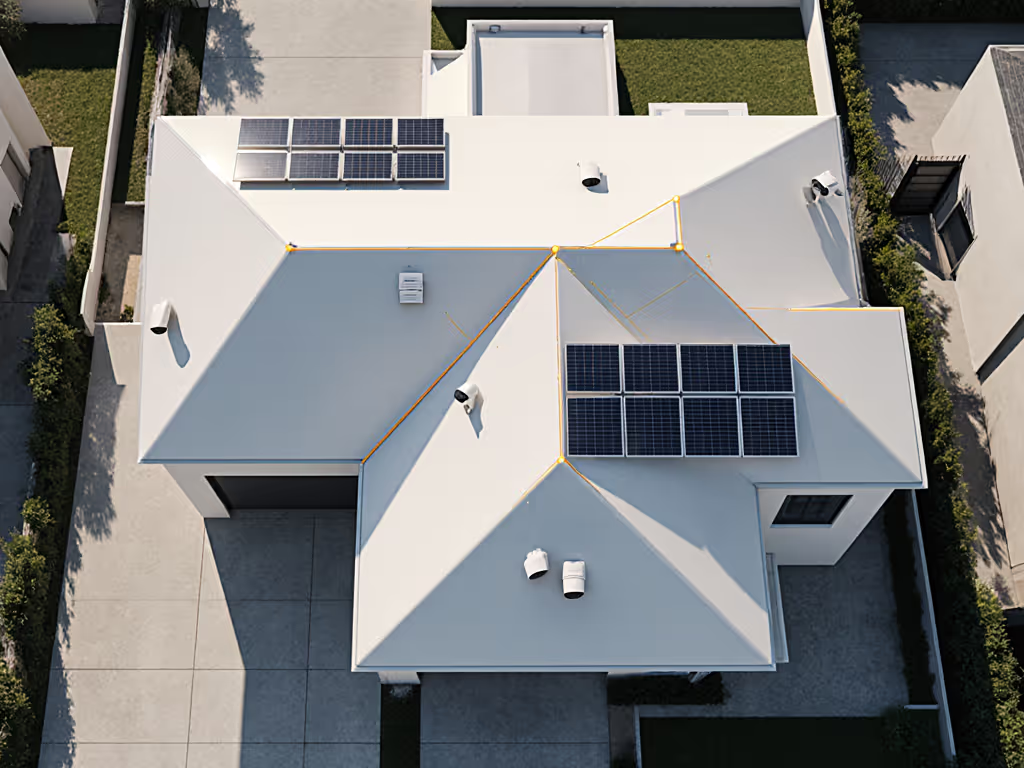
"Solar-powered" claims often hide critical flaws. Many cameras die in winter clouds because panels lack tilt adjustment or sit too low. Your solar security setup needs these non-negotiables:
- Panel-to-battery ratio: Minimum 1:1 wattage (e.g., 5W camera needs 5W+ panel)
- Tilt capability: Adjustable brackets to catch low winter sun
- Cold tolerance: Lithium batteries failing below 14°F (like some Reolink kits)
Critical checklist before installation:
- Test panel output in current conditions (use a $10 multimeter)
- Position panel 5° steeper than latitude for winter sun
- Route cables through conduit, rodents chew exposed wires
Skip this, and you'll climb ladders monthly. Do it right, and you'll achieve true "set-and-forget" power. Remember: Battery life claims ("3 months!") assume perfect sun. For tested off-grid power options, see our solar security camera battery tests. In reality, offline storage solutions like dual-battery systems buffer cloudy stretches.
Step 3: Network Smarter, Not Harder (Cut Lag, Not Cables)
Cellular cameras (4G LTE) solve Wi-Fi dead zones but introduce new pitfalls. If you're considering newer networks, our 5G security camera tests show when 5G actually improves reliability over LTE. Key mistakes:
- Mounting cameras where your phone has no signal (cameras need stronger reception)
- Using 2.4GHz Wi-Fi extenders (they drain battery faster than they help)
The fix? Run a low-bandwidth security test before mounting:
- Stand at your proposed camera spot with a cellular signal meter app
- Verify ≥2 bars (3+ bars ideal for HD video)
- If weak: Install a signal booster first (e.g., Wilson Electronics)
Cameras like the DEFEND Camera thrive here, they transmit short motion clips at 1/10th the bandwidth of live video. This avoids the "notification lag" that leaves you watching crimes after they happen. Autonomous surveillance systems must prioritize signal resilience over video resolution when offline. Reliability first, clarity second.
Step 4: Tune Detection Zones Like a Pro (Stop the Alert Flood)
This is where most off-grid systems unravel. For offline-friendly accuracy, compare on-device AI cameras that cut false alerts and avoid subscriptions. Motion zones that trigger on trees or headlights make you ignore alerts until it's too late. Your tuning workflow:
- Enable pixel-based filtering: Set sensitivity so a cat (20x20 pixels) triggers, but leaves (5x5) don't
- Layer activity zones: Draw tight boxes around doors/gates (not whole yards)
- Block reflective surfaces: IR glare off white walls doubles false alerts (as I saw in that driveway case)
Before/after example: One client's barn camera had 90+ daily false alerts from wind. After redrawing zones to exclude the field behind it, alerts dropped to 2–3 real events weekly. The system earned its keep.
The Quiet Proof of Reliability
True autonomy isn't just "no power grid," it's systems that run silently for months, then deliver court-worthy evidence when needed. When you do capture an incident, here's how to submit footage police will actually use. When I rewired that wobbling driveway camera to PoE, added a wedge mount, and tuned zones past glare, false alerts fell 95%. Plates popped at night. The house stopped buzzing every breeze.
That's the shift: from anxious monitoring to confident trust. Off-grid doesn't mean compromised. It means designing for the actual conditions where your property lives, not the idealized world camera marketers sell. Build for reality, not brochures.
Wire it once, keep it quiet. Your next step? Grab a notepad and scout your property today for the three critical factors: mount stability, sun exposure, and signal strength. Document what you find, and you'll skip 80% of installation mistakes before buying a single camera. Because reliability isn't luck. It is about build quality.
Related Articles