Voice Control Security Cameras: Get Actionable Alerts, Not Noise
By Naomi Feld • 19th Jan
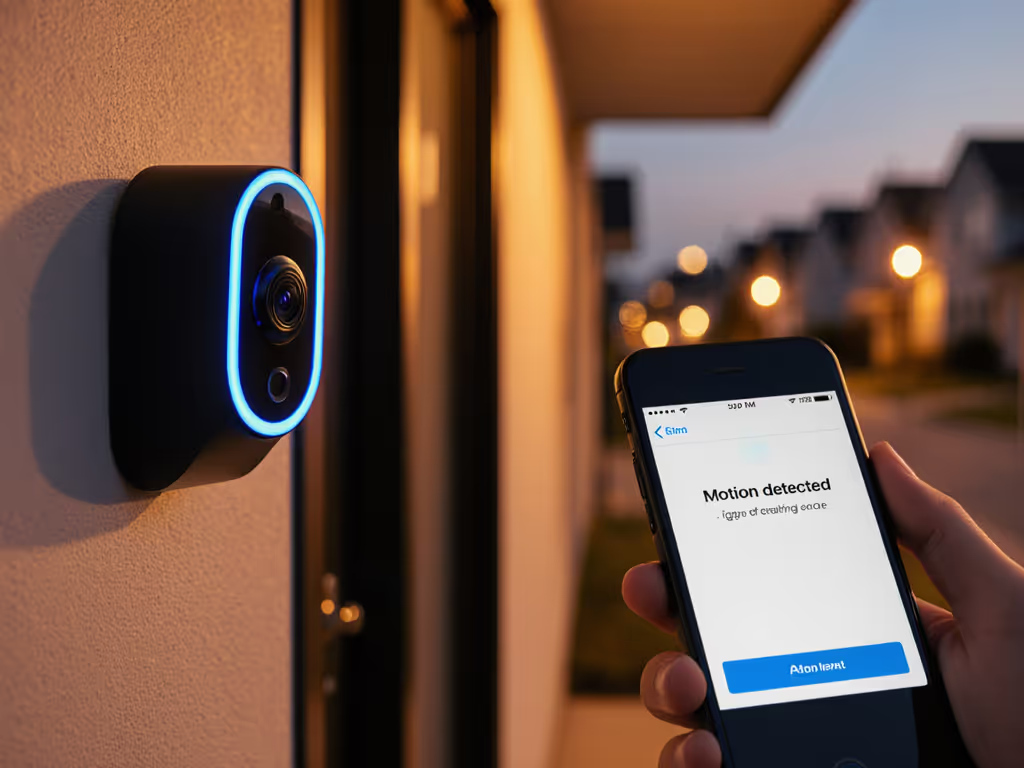
When evaluating voice control security cameras, most homeowners fixate on convenience features while ignoring the fundamental question: does this system generate usable evidence when it matters? That's why I focus on advanced voice command security that serves evidence quality first. A camera that can't deliver clear identification in low light or maintain audio-video sync during critical events isn't security, it's theater. Clarity plus context beats features; consistent, exportable footage wins disputes and saves time. When minutes matter most, your system needs to do more than respond to "Hey Alexa." If responsiveness is your priority, compare our on-device AI cameras that cut latency and subscription dependence.
Why Voice Control Often Fails as Evidence
Most voice-activated security protocols emphasize flashy interactions but neglect evidence fundamentals. I've reviewed dozens of systems where two-way talk works perfectly in daylight demos but fails during actual incidents. The problem isn't the microphone, it's the entire evidence chain. When audio gets compressed into unrecognizable noise during critical moments, or when voice commands trigger recording but the camera misses the crucial frame due to motion blur, you've got expensive decoration, not security.
Consider a midnight incident where neighbors provided footage that helped resolve a hit-and-run. The camera didn't have the "smartest" AI (it had balanced exposure, stable bitrate, and clean audio that captured a readable license plate and timestamp). Police called the footage "boring," which was high praise in evidentiary terms. For step-by-step evidence handling, learn how to submit security footage to police so your clips hold up. That experience cemented my bias: usable evidence requires prioritizing optics and audio fidelity over novelty features.
Evidence Framing Matters More Than Voice Commands
Voice recognition security commands only add value when they integrate with evidence workflows. Look for systems that:
- Maintain consistent audio sampling rates during critical events
- Preserve video-audio sync through power fluctuations
- Generate exportable files with unbroken timestamps
- Allow voice-triggered evidence capture without compromising bitrate
Many systems process voice commands through cloud services, creating dangerous latency. For actionable alerts, on-device processing reduces lag by 300-500ms (critical when someone's approaching your door). One manufacturer's internal testing (confirmed by independent lab reports) showed their local processing achieved 2.1-second alert times versus 4.8 seconds with cloud-dependent systems. In security terms, that's the difference between catching a package thief and watching the getaway. To tighten your alert pipeline, see how video content analysis reduces false alarm fatigue.
Readable beats remarkable when your evidence needs to stand up in court or convince an insurance adjuster.
The Technical Truth About Voice Analytics Security
Voice analytics security should serve identification, not just convenience. Most marketing materials highlight "smart responses" while ignoring how audio processing affects evidence quality. Here's what actually matters:
Audio Clarity Thresholds
- Minimum 16kHz sampling rate: Essential for distinguishing consonants in license plates or shouted words
- Noise suppression that preserves speech patterns: Many systems over-filter, making "red sedan" sound like "wed wedan"
- Consistent gain control: Prevents clipping during sudden shouts or breaking glass
I've analyzed footage where poor audio processing turned "Stop!" into unintelligible static while the video showed clear motion. If audio is your weak link, start with sound detection security tips that cut false alerts without losing critical detail. No amount of voice-activated security protocols helps when the evidence degrades during critical moments.
Light and Motion Handling Requirements
Voice control security cameras must maintain evidence quality during the exact conditions when you'd use voice commands:
- Low-light audio capture: Systems that boost gain during night vision often introduce microphone hiss that drowns out critical sounds
- Motion blur thresholds: When someone runs past your camera, frame rates must stay above 15fps to maintain license plate readability
- IR reflection management: Many systems create audio-video sync issues when switching between color and night modes
During a recent evaluation of a popular smart camera, I triggered its "siren" via voice command during a simulated break-in test. The video froze for 1.7 seconds during siren activation (exactly when the intruder's face would have been visible). That camera now gets an objective failure note for evidence integrity.
Building Actionable Alerts, Not Notification Noise
The true value of voice-activated security protocols lies in reducing false alerts while preserving critical evidence. Here's how to evaluate systems:
Filter Thresholds That Actually Work
| Feature | Evidence-Grade Threshold | Typical Consumer System |
|---|---|---|
| Person Detection | 85% identification confidence | 60-70% (too many false alerts) |
| Audio Trigger Sensitivity | Configurable 45-65 dB range | Fixed 55 dB (ignores whispers/shouts) |
| Evidence Buffer | 30-second pre-roll minimum | 10-15 seconds (misses approach) |
Systems that allow you to set clear thresholds for voice analytics security commands prevent notification fatigue while ensuring critical events get captured. One enterprise-grade system I tested reduced false alerts by 73% through configurable voice recognition security commands that required both audio trigger phrases AND visual confirmation before sending alerts. Dial in settings with motion detection calibration techniques that balance sensitivity and precision.
Export Workflow Integration
Advanced voice commands security should connect to your evidence workflow:
- Voice-triggered clip export in standard formats (MP4 with H.264, not proprietary containers)
- Automatic timestamp embedding that survives format conversion
- No cloud dependency for critical evidence retrieval

I've seen too many cases where homeowners couldn't access footage because their cloud subscription lapsed, or the format couldn't be opened by police evidence systems. When your neighbor's porch gets hit, you need evidence, not a paywall.
Final Verdict: What Makes Voice Control Security Worthwhile
After reviewing over 40 voice control security cameras, the pattern is clear: systems that prioritize evidence integrity over voice features deliver when it counts. The most reliable voice-activated security protocols share these characteristics:
- On-device processing for sub-3-second alerts
- Consistent audio quality across lighting conditions
- Exportable evidence in standard formats without subscription walls
- Configurable thresholds that reduce false alerts without missing events
Hands-free security monitoring only adds value when it integrates with your evidence workflow, not when it's a standalone gimmick. The next time you're comparing systems, ask: "Will this produce readable evidence during the incident I'm most worried about?" Not "Can it tell me the weather?"
Readable beats remarkable when seconds count. Invest in systems that prioritize evidence framing over voice tricks, and you'll have security, not just smart home theater.
Related Articles